There is something comforting about a skillet of soft eggs on a weekday morning. When I was short on time but still wanted a breakfast that would keep me full until lunch, I started stirring cottage cheese into my eggs. It sounds unusual, but the result is wonderfully creamy, almost like a custard, and it adds a good amount of protein without any extra fuss. This is the kind of simple, reassuring breakfast that works just as well for a busy family morning as it does for a slow weekend.

Scrambled Eggs with Cottage Cheese
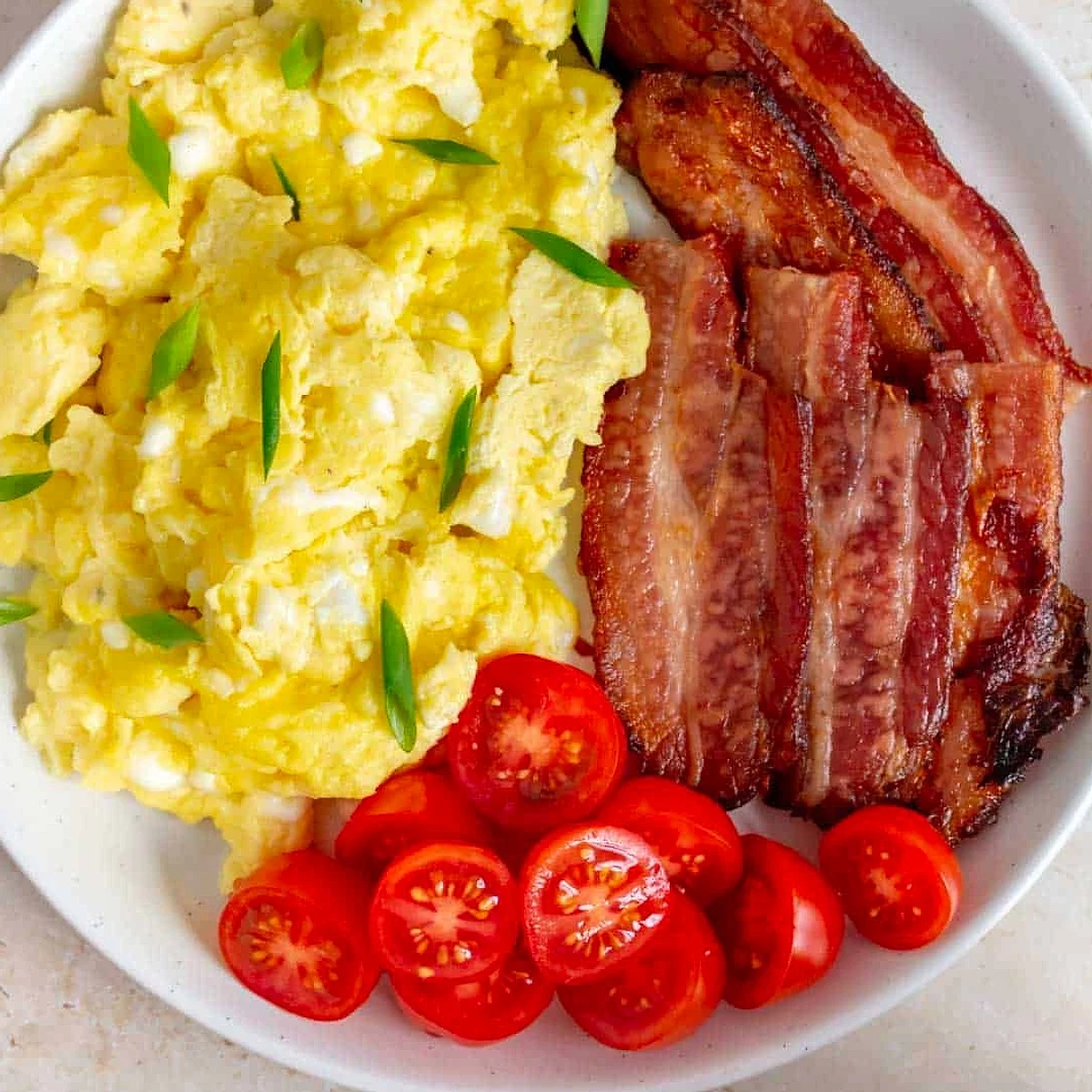
What makes this version special is the texture. Plain scrambled eggs can turn dry and rubbery if they cook too long, but cottage cheese keeps them tender and moist from the first stir to the last. As the curds warm, the cottage cheese melts softly into the egg, giving you big, pillowy bites instead of tight little crumbles. The flavor stays mild and savory, so the eggs taste like eggs, only richer and more satisfying. A pinch of salt and a few grinds of black pepper are all you need to let the natural flavors shine. Served warm on a plate with a slice of toast, it feels like a proper homestyle breakfast that will keep you going for hours.
Ingredients & Substitutions
Eggs: Six large eggs give you a generous, fluffy portion for two hungry people. Fresh eggs with bright yolks work well, and you can use the same number of extra-large eggs if that is what you have on hand.
Cottage Cheese: Two percent milkfat cottage cheese is my preference because it is creamy without being heavy. Full-fat works beautifully too if you want extra richness, and low-fat will be a little firmer, so stir gently and keep the heat low.
Butter: Unsalted butter lets you control the seasoning. If you only have salted butter, cut back on the salt. Olive oil can stand in if you prefer, though the eggs will taste a little less rich.
Salt and Pepper: Season lightly at the start and taste at the end. Cottage cheese already contains some sodium, so you may need less salt than you expect.
Can I Make Cottage Cheese Eggs Ahead of Time?
These eggs are at their best served straight from the pan, while they are still soft and glossy. If you try to hold them for long, they firm up and lose some of that custardy quality. The good news is that you can prep the ingredients ahead. Crack the eggs into a bowl, whisk them with the cottage cheese and seasoning, and keep the mixture covered in the fridge for up to a few hours. When you are ready, melt the butter and cook the mixture over low heat, stirring gently. This way your breakfast still comes together in about five minutes, even on the busiest mornings.
How to Store Leftover Scrambled Eggs
Leftover eggs keep well in an airtight container in the refrigerator for up to three days. Let them cool to room temperature for no more than about fifteen minutes first, then cover and chill them promptly. Reheat slowly in a nonstick pan over low heat with a teaspoon of butter or a splash of milk, stirring often, so they stay soft rather than turning rubbery in the microwave.
Can I Freeze Scrambled Eggs with Cottage Cheese?
Freezing is possible, though the texture will be a little softer once thawed.
- Cook the eggs until just set, then cool them completely.
- Portion them into a freezer-safe container, pressing out excess air.
- Freeze for up to two months, then thaw overnight in the fridge and reheat gently in a pan.
 Recipe byBrooke Miller
Scrambled Eggs with Cottage Cheese
Ingredients
- 6 large eggs
- ⅔ cup cottage cheese (2% milkfat)
- Salt and pepper, to taste
- 1 tablespoon butter (unsalted)
Instructions
- Crack the 6 large eggs into a medium bowl and whisk until the whites and yolks are fully combined.
- Add the ⅔ cup cottage cheese to the eggs and whisk again until the mixture is mostly smooth, with a few small curds still visible.
- Season the mixture with salt and pepper to taste.
- Melt the 1 tablespoon unsalted butter in a nonstick skillet over medium-low heat until it foams but does not brown.
- Pour the egg mixture into the skillet and let it sit for about 20 seconds until the edges just begin to set.
- Gently stir with a silicone spatula, pushing the eggs from the edges toward the center, for 2 to 3 minutes.
- Continue cooking, stirring slowly, until the eggs are soft, creamy and just set but still slightly glossy, about 1 to 2 minutes more.
- Remove the pan from the heat immediately, as the eggs will continue cooking, then serve warm.
Notes
- For extra creamy eggs, lower the heat and stir more often.
- Full-fat cottage cheese adds more richness if you prefer.
- Serve with toast, fresh fruit or sautéed spinach for a more complete breakfast.