This spicy chicken bulgogi is my go-to when I need a filling lunch that comes together fast. Bite-size chicken soaks up a sweet and fiery marinade, then cooks in minutes.
It is perfect for weekday lunches, meal prep containers, or a quick midweek dinner when nobody wants to wait. The lettuce cups keep things light and fresh.
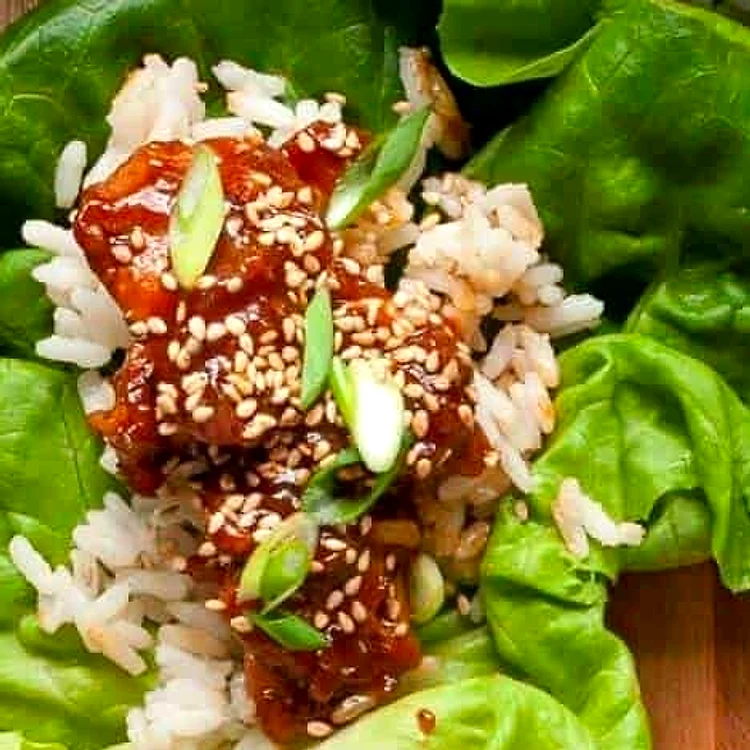
Best of all, it uses pantry staples like soy sauce, honey and rice, so it stays budget-friendly without tasting plain.
Why This Recipe Works
Chicken breast is lean and high in protein, which makes this bulgogi a satisfying lunch that keeps you full through the afternoon. Cutting it into small pieces means it cooks quickly and picks up plenty of flavor from the sauce.
The sauce balances salty soy, sweet honey and heat from gochujang and red chili flakes. A little arrowroot starch thickens it into a glossy coating that clings to every piece.
Ingredients
- Chicken breast
- Olive oil
- Yellow onion
- Butter lettuce
- White or brown rice
- Green onions
- Sesame seeds
- Low-sodium soy sauce
- Cold water
- Gochujang
- Garlic
- Fresh ginger
- Red chili flakes
- Rice vinegar
- Sesame oil
- Honey
- Arrowroot or tapioca starch
Check the recipe card below for exact amounts.
Substitutions and Variations
- Chicken thighs – Boneless thighs stay juicier and are a little more forgiving if you tend to overcook chicken.
- Milder heat – Use only 1 teaspoon of chili flakes and half the gochujang for a family-friendly version.
- Cornstarch swap – Regular cornstarch works just as well in place of arrowroot or tapioca starch.
- Brown rice bowls – Serve over brown rice with shredded carrots and cucumber for extra fiber.
How to Make Spicy Chicken Bulgogi
- Step 1 – In a bowl, whisk the soy sauce, rice vinegar, honey, gochujang, chili flakes, sesame oil, minced garlic and grated ginger together.
- Step 2 – Add the bite-size chicken pieces and toss to coat. Let them marinate for at least 15 minutes, or cover and refrigerate for up to 4 hours.
- Step 3 – Mix the arrowroot starch with 1 to 2 tablespoons of cold water until smooth, then stir it into the marinade so it is ready to thicken the sauce.
- Step 4 – Heat the olive oil in a large skillet over medium-high heat until it shimmers.
- Step 5 – Add the diced onion and cook for 2 to 3 minutes until softened and lightly golden.
- Step 6 – Add the chicken and marinade. Cook for 6 to 8 minutes, stirring often, until the chicken is cooked through and the sauce is thick and glossy.
- Step 7 – Remove from heat and stir in the sliced green onions. Taste and add more honey or chili flakes if you like.
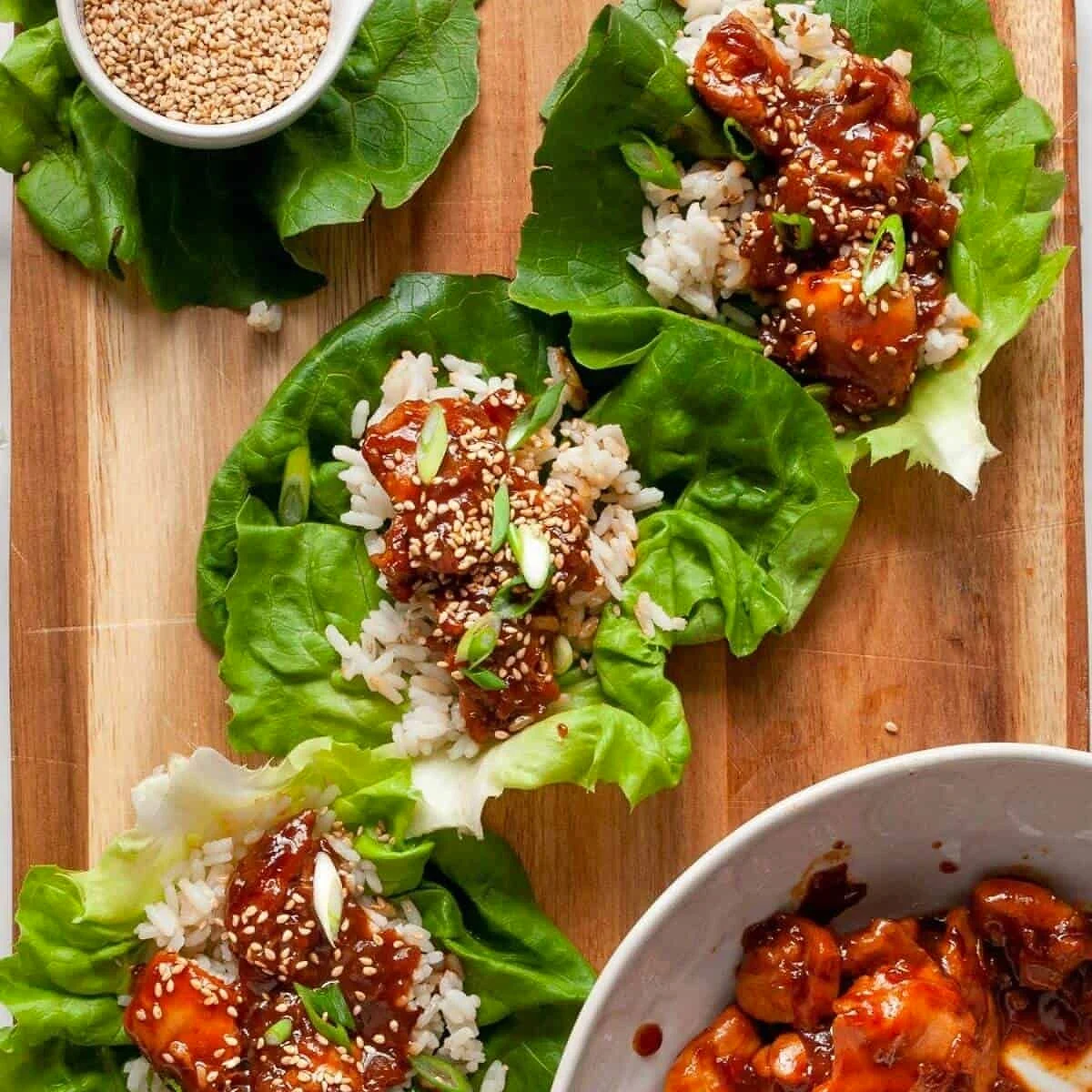
- Step 8 – Spoon the chicken over warm rice or into butter lettuce cups, then sprinkle with sesame seeds.
Recipe Tips
- Cut evenly – Uniform 1-inch pieces cook at the same rate, so no pieces are dry.
- Use cold water carefully – Add the starch slurry gradually; the sauce thickens fast once it reaches a simmer.
- Adjust sweetness – Start with 1 tablespoon of honey and add more after tasting, since gochujang brands vary.
Serving Suggestions
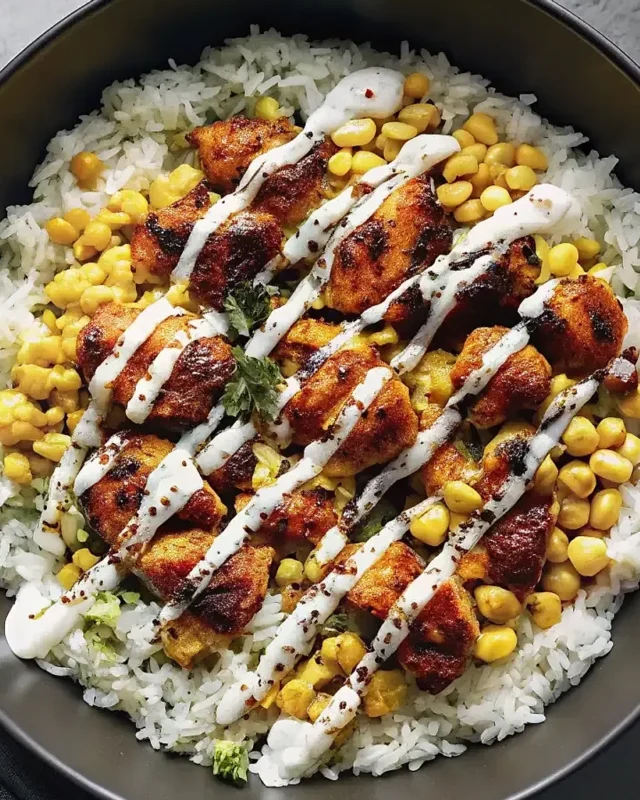
Pack the chicken over rice with a handful of lettuce on the side for a balanced lunch box. Add a fried egg or steamed broccoli if you want more volume.
For lettuce cups, spoon the warm chicken into leaves and top with green onions and sesame seeds. They are easy to eat with your hands at a desk or on a picnic blanket.
How to Store Leftovers
Keep the chicken and rice in separate airtight containers in the fridge for up to 4 days. Keep lettuce separate so it stays crisp.
To reheat, microwave the chicken for 1 to 2 minutes, stirring halfway, adding a splash of water if it looks dry. Freezing the chicken without lettuce works for up to 2 months.
Frequently Asked Questions
Can I make spicy chicken bulgogi ahead for meal prep?
Yes. Cook the chicken and rice, then store them in separate containers. Add fresh green onions and sesame seeds just before eating to keep everything bright.
How spicy is this chicken bulgogi?
It depends on how much chili flakes and gochujang you use. Start with 1 teaspoon of chili flakes and add more after tasting for a medium to hot level.
Can I use chicken thighs instead of breast?
Absolutely. Boneless thighs stay juicier and work well with the same marinade. Cook them a few extra minutes until they reach 165°F inside.
Is this recipe gluten-free?
Standard gochujang and soy sauce often contain wheat. Look for gluten-free versions of both to keep this dish gluten-free.
 Recipe byBrooke Miller
Spicy Chicken Bulgogi Recipe
Ingredients
- 1 pound chicken breast, skinless and boneless, cut into 1-inch bite-size pieces
- 1 to 2 tablespoons olive oil
- 1 small yellow onion, finely diced
- 1 head butter lettuce
- 1 cup white or brown rice, cooked
- 2 green onions, thinly sliced
- 1 tablespoon sesame seeds (optional topping)
- 1/4 cup low-sodium soy sauce
- 1 to 2 tablespoons cold water
- 1 tablespoon gochujang Korean chili paste
- 2 large garlic cloves, minced
- 1 teaspoon fresh ginger, grated
- 1 to 3 teaspoons red chili flakes (based on desired spiciness)
- 1 tablespoon rice vinegar
- 1 teaspoon sesame oil
- 1 to 2 tablespoons honey (based on desired sweetness)
- 1 teaspoon arrowroot or tapioca starch (or cornstarch)
Instructions
- In a bowl, whisk the soy sauce, rice vinegar, honey, gochujang, chili flakes, sesame oil, minced garlic and grated ginger together.
- Add the bite-size chicken pieces and toss to coat. Marinate for at least 15 minutes, or refrigerate up to 4 hours.
- Mix the arrowroot starch with 1 to 2 tablespoons of cold water until smooth, then stir it into the marinade.
- Heat the olive oil in a large skillet over medium-high heat until it shimmers.
- Add the diced onion and cook for 2 to 3 minutes until softened and lightly golden.
- Add the chicken and marinade. Cook for 6 to 8 minutes, stirring often, until cooked through and the sauce is thick and glossy.
- Remove from heat and stir in the sliced green onions. Adjust honey or chili flakes to taste.
- Spoon the chicken over warm rice or into butter lettuce cups, then sprinkle with sesame seeds.
Notes
- Chicken thighs can be used in place of breast; cook a few minutes longer.
- Store chicken and rice separately for best texture.
- Gochujang brands vary in sweetness and heat, so taste before adding more honey.