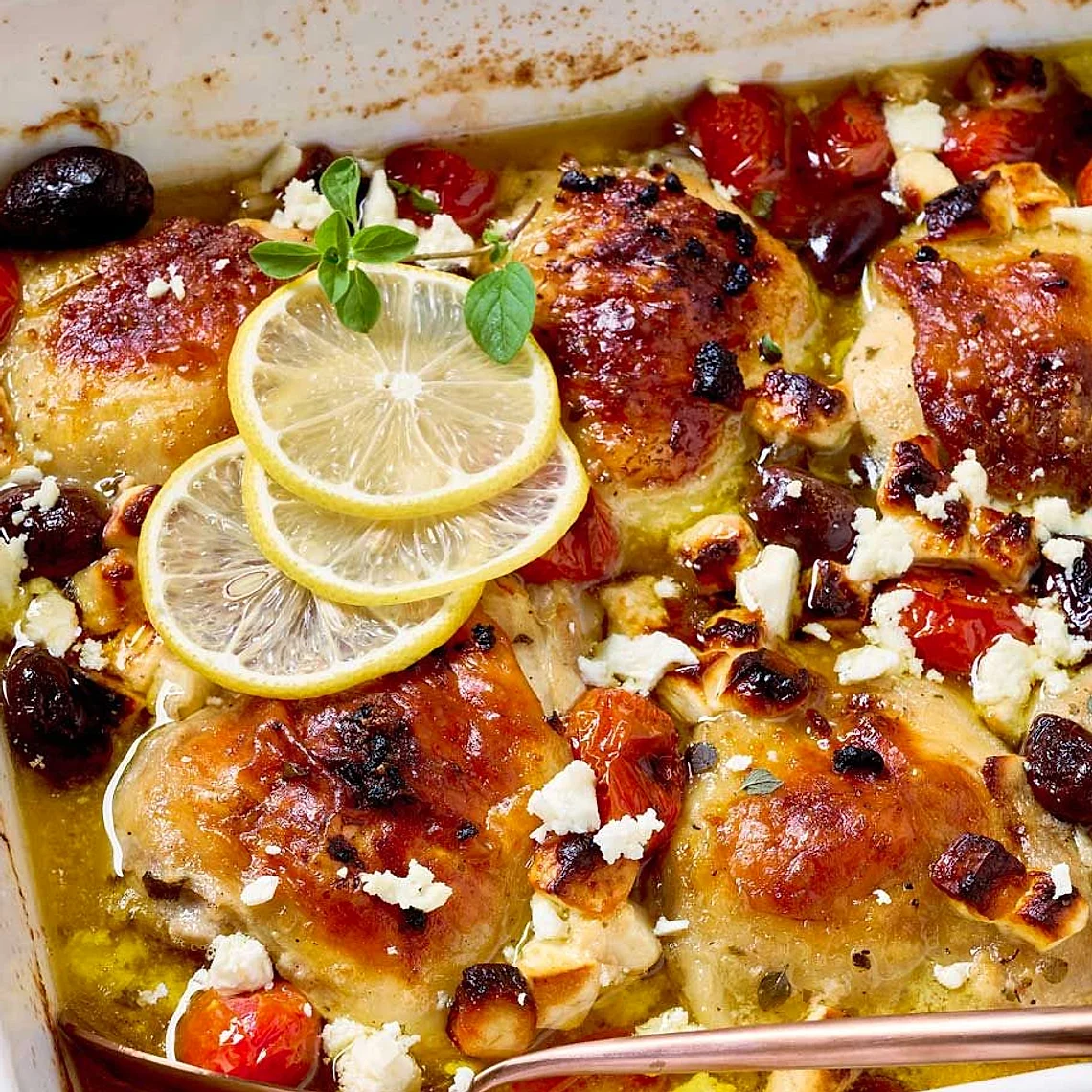
This greek lemon chicken is my go-to when I need a filling, high-protein lunch that doesn’t take all morning to make. The marinade is simple, and the chicken roasts on one pan while you get on with your day.
Bone-in, skin-on thighs stay juicy and pick up plenty of lemon and garlic flavor. Feta, tomatoes and Kalamata olives add a salty, tangy finish that makes every bite feel like a proper Greek meal.

It’s perfect for weeknight dinners, lazy Sunday lunches, or packing into containers for the week ahead.
Why This Recipe Works
Chicken thighs are forgiving. They have more fat than breasts, so they stay moist even if you leave them in the oven a few minutes too long. Marinating them in lemon juice, olive oil and garlic gives the meat flavor all the way through, not just on the surface.
Because everything roasts together on one sheet pan, cleanup is quick. You get a balanced, high-protein meal with vegetables and healthy fats without needing a side dish.
Ingredients
- Lemon juice
- Olive oil
- Garlic
- Plain yogurt
- Dried oregano
- Salt
- Black pepper
- Bone-in, skin-on chicken thighs
- Feta cheese
- Cherry tomatoes
- Kalamata olives
- Lemon slices (optional)
Find the exact amounts in the recipe card below.
Variations
- Boneless thighs – Use boneless, skinless thighs and cut the roasting time by about 10 minutes. Check that the internal temperature reaches 165°F.
- Dairy-free – Swap the plain yogurt for a plain unsweetened coconut or almond yogurt. The marinade stays just as tangy.
- Vegetable add-ins – Toss red onion wedges or bell pepper strips onto the pan for extra color and fiber.
- Dairy-free cheese – Skip the feta or use a plant-based feta, and finish with fresh parsley for a fresh flavor.
How to Make Greek Lemon Chicken
- Step 1 – Preheat the oven to 425°F (220°C) and line a large baking sheet or roasting pan with foil for easy cleanup.
- Step 2 – Whisk together the lemon juice, olive oil, minced garlic, yogurt, dried oregano, salt and black pepper in a large bowl.
- Step 3 – Pat the chicken thighs dry with paper towels, then sprinkle both sides with salt. Add them to the marinade and turn to coat.
- Step 4 – Cover the bowl and refrigerate for at least 30 minutes, or up to overnight, so the flavors can soak in.
- Step 5 – Arrange the chicken skin-side up on the prepared pan with space between each piece. Spoon any leftover marinade over the top.
- Step 6 – Roast for 35 to 40 minutes, until the skin is golden and the internal temperature reaches 175°F (80°C) near the bone.
- Step 7 – Scatter the tomatoes, olives and feta cubes around the chicken, then roast for another 8 to 10 minutes until the tomatoes soften and blister.
- Step 8 – Rest for 5 minutes, then garnish with lemon slices and serve warm.
Expert Tips
- Dry the skin – Patting the chicken dry before roasting helps the skin crisp instead of steam.
- Don’t crowd the pan – Leave space between thighs so hot air can circulate and brown the skin evenly.
- Add feta late – Adding the cheese in the last 10 minutes keeps it creamy rather than fully melted and oily.
Serving Suggestions
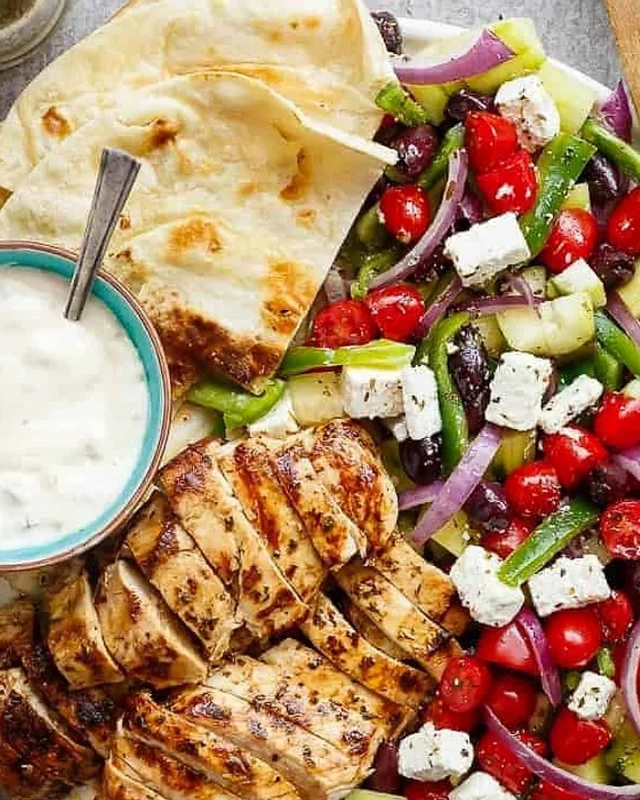
For a complete high-protein lunch, serve the chicken with warm pita, a crisp cucumber and tomato salad, or a spoonful of tzatziki. Steamed rice or roasted potatoes also soak up the lemony pan juices nicely.
For a lighter plate, pile the chicken over a bed of baby greens with red onion and a drizzle of the pan juices. It works hot or at room temperature, which makes it easy to pack.
How to Store Leftovers
Store cooled chicken and pan juices in an airtight container in the fridge for up to 3 to 4 days. Keep the feta and olives separate if you want the best texture for lunches later in the week.
To freeze, let the chicken cool completely, then wrap portions tightly and freeze for up to 2 months. Reheat in a 350°F (175°C) oven until hot throughout, or microwave covered in short bursts.
Frequently Asked Questions
Can I make greek lemon chicken ahead of time?
Yes. Marinate the chicken overnight for the best flavor, or roast it and refrigerate for up to 4 days. Add the feta and olives when reheating so they stay fresh.
What internal temperature should chicken thighs reach?
Bone-in chicken thighs are best cooked to 175°F (80°C) for tender meat. The minimum safe temperature for all poultry is 165°F (74°C).
Can I use chicken breasts instead of thighs?
You can, but breasts dry out more easily. Use boneless breasts, roast them for about 20 to 25 minutes, and check that they reach 165°F (74°C).
Is greek lemon chicken good for meal prep?
It is. The chicken holds up well in containers for several days, and pairing it with rice, vegetables or salad makes a balanced lunch you can grab all week.
 Recipe byBrooke Miller
Greek Lemon Chicken
Ingredients
- 1/4 cup lemon juice, freshly squeezed
- 1/4 cup olive oil
- 4 garlic cloves, minced
- 2 tablespoons plain yogurt (see notes for dairy-free option)
- 2 teaspoons dried oregano
- 1 teaspoon salt
- 1/4 teaspoon ground black pepper
- 8 bone-in, skin-on chicken thighs
- Salt to sprinkle on the chicken
- 4 ounces Feta cheese, cut into small cubes
- 1/2 cup small tomatoes, like cherry tomatoes
- 1/2 cup Kalamata olives
- Lemon slices for garnish (optional)
Instructions
- Preheat the oven to 425°F (220°C) and line a large baking sheet or roasting pan with foil.
- Whisk together the lemon juice, olive oil, minced garlic, yogurt, dried oregano, 1 teaspoon salt and black pepper in a large bowl.
- Pat the chicken thighs dry, sprinkle both sides with salt, then add them to the marinade and turn to coat.
- Cover and refrigerate for at least 30 minutes, or up to overnight.
- Arrange the chicken skin-side up on the pan with space between pieces. Spoon any leftover marinade over the top.
- Roast for 35 to 40 minutes, until the skin is golden and the thickest part reaches 175°F (80°C).
- Scatter the tomatoes, olives and feta around the chicken and roast for another 8 to 10 minutes.
- Rest for 5 minutes, garnish with lemon slices and serve warm.
Notes
- For dairy-free, use plain unsweetened coconut or almond yogurt.
- Boneless, skinless thighs work well; reduce roasting time by about 10 minutes.
- Cherry or grape tomatoes both work; halve larger ones.
- Store leftovers in the fridge for 3 to 4 days or freeze for up to 2 months.