There is something deeply comforting about a plate of pad thai on a slow weekend lunch. Growing up, my kitchen always smelled of garlic and tamarind whenever someone wanted something filling but not heavy. This chicken pad thai recipe brings that same cozy feeling to your table, with tender chicken, springy rice noodles and a sticky-sweet sauce that everyone seems to ask for seconds of. It is a true crowd-pleaser, and the protein from the chicken, eggs and tofu keeps you full well into the afternoon.
Chicken Pad Thai
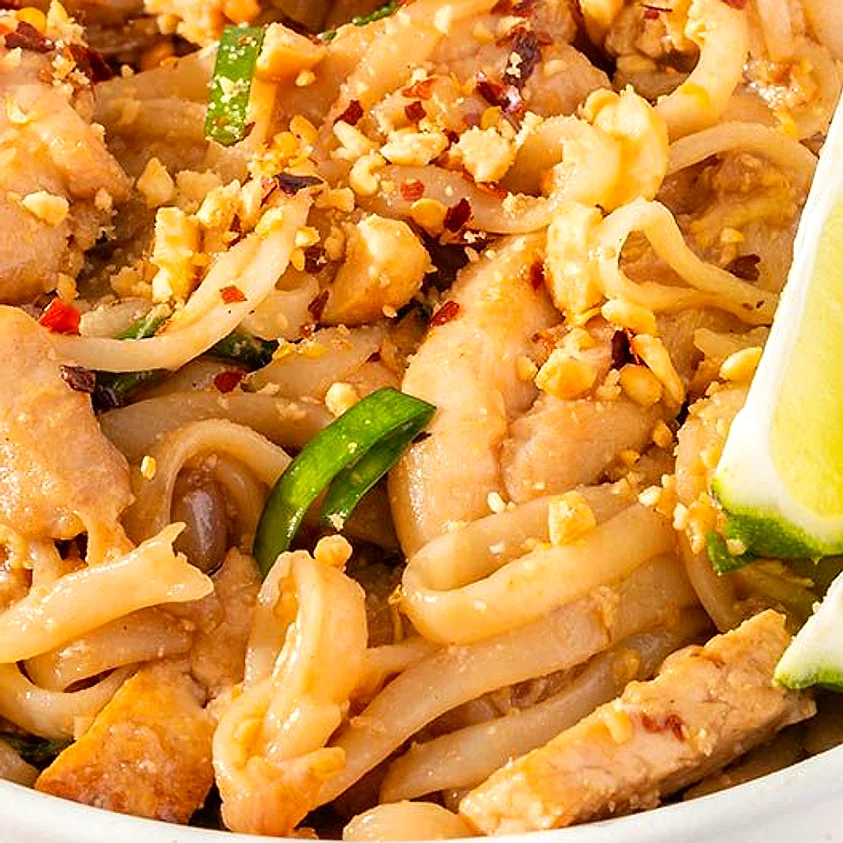
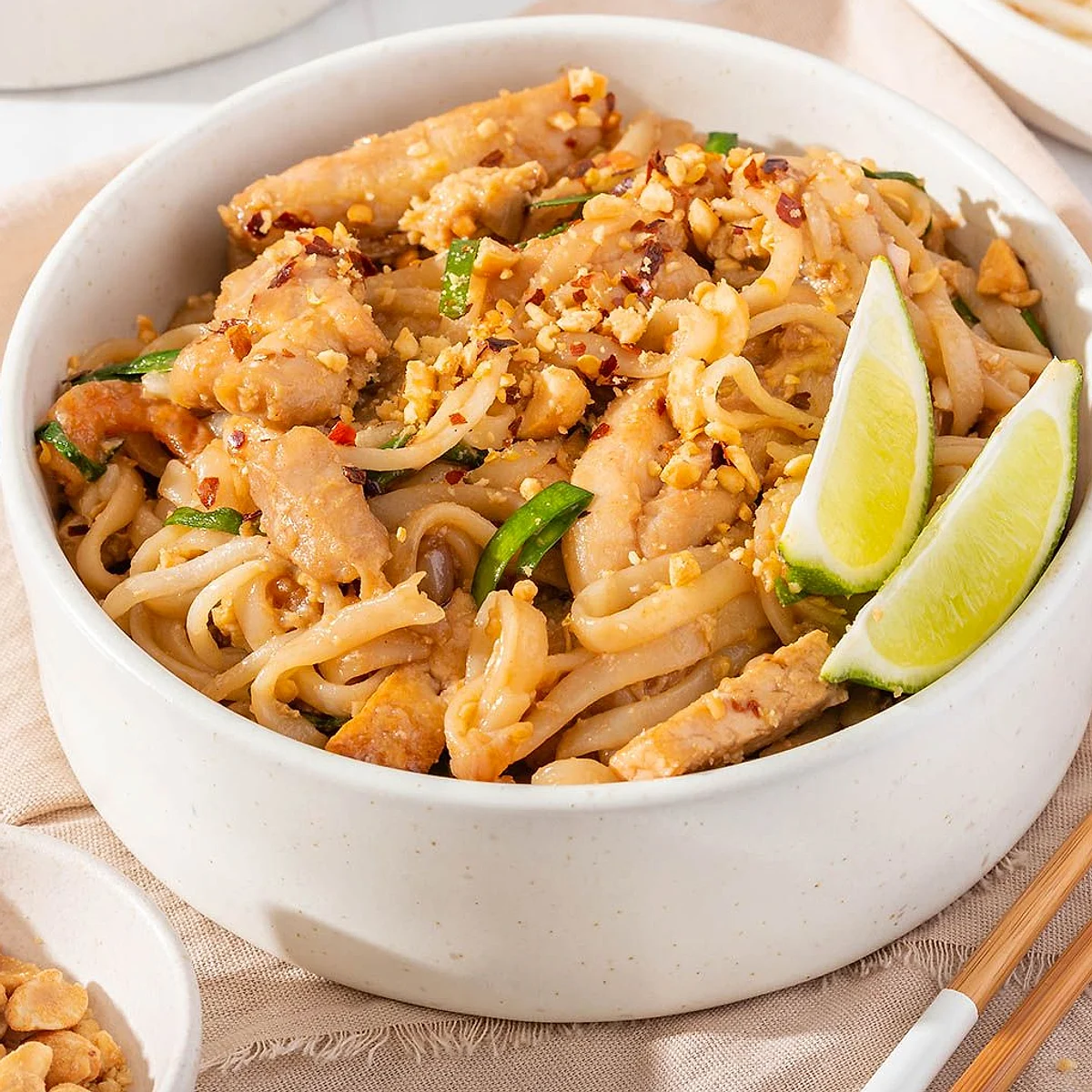
What makes pad thai so special is the balance on the plate. The sauce hits sweet, sour, salty and savory all at once, and it clings to every strand of noodle. Chicken thigh stays juicy and tender even over high heat, while the tofu turns golden at the edges and the noodles soften just enough to chew without going mushy. Scrambled egg runs through the dish in soft ribbons, and the bean sprouts and garlic chives add a fresh, crisp snap. Finished with crushed peanuts, a squeeze of lime and a pinch of chili flakes, every bite gives you a little crunch, a little heat and a lot of comfort.
Ingredients & Substitutions
Tamarind: Use thick Thai tamarind pulp for the sourness that defines this dish. Soak it in boiling water and press it through a strainer. If you cannot find it, mix a little lime juice with brown sugar as a rough stand-in, though the flavor will be lighter.
Chicken: Chicken thigh stays juicy and forgiving, so it is my first choice. Breast works too, but slice it thin and do not overcook it. Firm tofu is a good option if you want a vegetarian version.
Fish Sauce and Oyster Sauce: These bring the savory depth that makes the sauce taste authentic. Choose a good quality fish sauce and check the label. For a milder version, you can reduce the fish sauce slightly and add a splash of soy sauce.
Dried Shrimp: Dried shrimp add a briny, toasty layer of flavor. Rinse them quickly and chop them finely. If you skip them, the dish will still be delicious, just a little less rich.
Noodles: Dry pad thai noodles are best when soaked until just pliable, not fully soft. Flat rice noodles are the traditional choice. Stir them gently so they do not break.
Garlic Chives and Bean Sprouts: Garlic chives give a mild onion-garlic bite that is hard to replace. Green onions work well in a pinch. Add bean sprouts at the very end so they stay crisp.
Can I Make Chicken Pad Thai Ahead of Time?
Pad thai is really best cooked and eaten right away, since the noodles firm up and the sauce thickens as it sits. That said, you can prepare most of the work in advance. Mix the tamarind sauce, chop the shallots and garlic, slice the chicken and tofu, and whisk the eggs up to a day ahead. Keep everything in separate containers in the fridge. When you are ready to eat, the actual cooking takes only about ten minutes in a hot wok, so this is a practical recipe for busy lunches.
How to Store Chicken Pad Thai
If you have leftovers, let the noodles cool to room temperature, then store them in an airtight container in the refrigerator for up to three days. Keep the peanuts, lime and chili flakes separate so they stay crunchy and bright. To reheat, add a splash of water to a hot pan and stir the noodles over medium heat until warmed through, which helps bring back their silky texture.
Can I Freeze Chicken Pad Thai?
Freezing is not ideal because the rice noodles turn stiff and the eggs become grainy, but you can freeze the cooked chicken and sauce separately.
- Cool the cooked chicken and sauce completely, then portion them into freezer-safe containers.
- Label each container with the date and use within two months.
- Thaw overnight in the fridge, then reheat with freshly soaked noodles and a splash of water in a hot pan.
 Recipe byBrooke Miller
Chicken Pad Thai
Ingredients
- 3 tablespoon (1.5 oz) Thai tamarind pulp
- 1/4 cup boiling water (212°F (100°C))
- 1/4 cup brown sugar
- 2 tablespoon fish sauce
- 2 tablespoon oyster sauce
- 8 oz (227 g) dry pad thai noodles
- 3 tablespoon vegetable oil
- 4 cloves garlic, minced
- 1/3 cup shallots (about 3 shallots, roughly chopped)
- 4 oz firm tofu, cut into thin slices
- 2 tablespoon dried shrimp
- 8 oz chicken thigh (or breast), thinly sliced
- 1 teaspoon Thai light soy sauce
- 1 teaspoon fish sauce
- 1 teaspoon cornstarch
- 1 teaspoon water
- 2 eggs, whisked
- 2 cups bean sprouts (loosely packed)
- 10 garlic chives, cut into 1-inch pieces
- 1/4 cup roasted peanuts, roughly chopped
- 1 lime, cut into wedges
- Dried chili flakes
Instructions
- Soak the dry pad thai noodles in warm water for 20 to 30 minutes until pliable but still firm. Drain and set aside.
- Soak the tamarind pulp in the boiling water for 10 minutes, then press and strain it to get a smooth, thick liquid.
- Combine the strained tamarind liquid, brown sugar, 2 tablespoons fish sauce and 2 tablespoons oyster sauce in a small bowl and stir until the sugar dissolves.
- Mix the chicken with the Thai light soy sauce, 1 teaspoon fish sauce, cornstarch and 1 teaspoon water. Let it rest for 10 minutes.
- Heat 1 tablespoon of the vegetable oil in a wok over high heat. Add the tofu slices and fry until golden on both sides, then set aside.
- Add another tablespoon of oil and stir-fry the chicken until just cooked through, about 3 minutes. Set aside with the tofu.
- Add the remaining oil to the wok, then fry the garlic, shallots and dried shrimp for about 1 minute until fragrant.
- Push the aromatics to one side, pour in the whisked eggs and scramble until just set.
- Add the drained noodles and the sauce, tossing constantly for 2 to 3 minutes until the noodles absorb the sauce and soften.
- Return the chicken and tofu to the wok, add the garlic chives and half the bean sprouts, and toss for 1 minute.
- Serve immediately topped with the remaining bean sprouts, chopped peanuts, a squeeze of lime and chili flakes.
Notes
- Tamarind pulp can be replaced with a mix of lime juice and brown sugar if needed.
- Do not oversoak the noodles, as they will break apart in the wok.
- Chicken breast works well if you prefer a leaner option.