Bibimbap is one of those meals that feels special but is really just a bowl of rice topped with neatly arranged pieces of food. Each topping gets cooked separately, which makes it easy to batch and assemble.
This is my go-to for busy weekdays because most of the work happens while the rice cooks. It is also a great option for meal prep lunches.
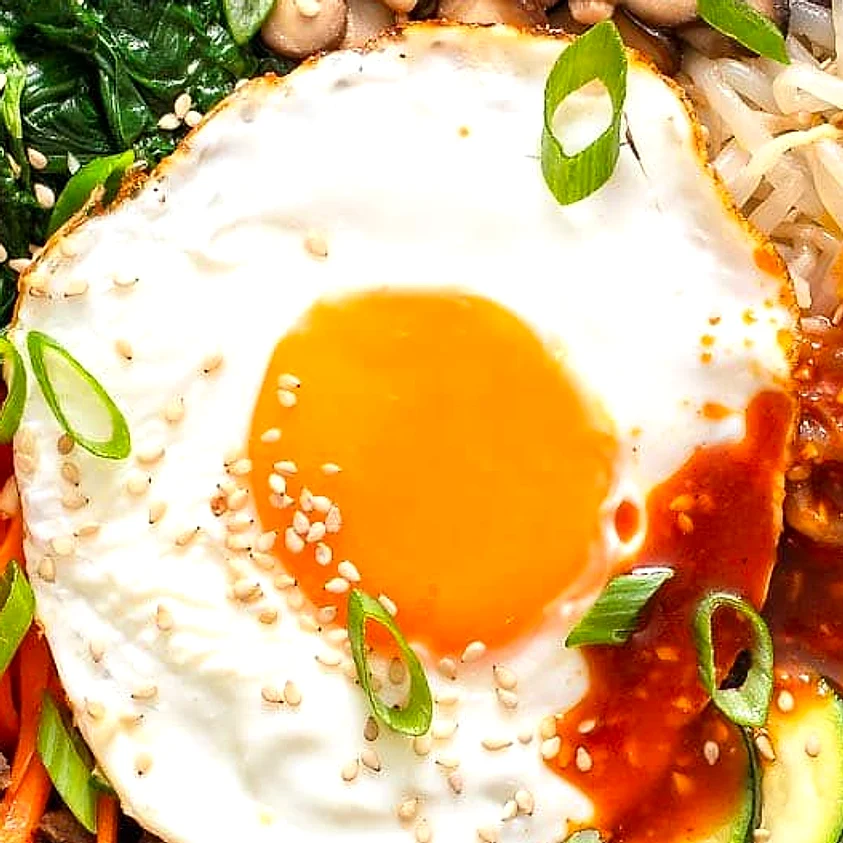
Everything gets mixed together with a spicy gochujang sauce before eating, so every bite has beef, vegetables, rice and egg. It is filling, colorful and perfect for potlucks or a relaxed weekend dinner.
Why This Recipe Works
Thin slices of marinated beef cook in minutes, so the protein is ready quickly. Paired with eggs and rice, this bowl delivers plenty of protein to keep you full through the afternoon.
Every vegetable is cooked briefly with a little salt and sesame oil, which keeps them crisp and bright. The gochujang sauce ties everything together with sweet and spicy flavor that does not need any extra seasoning.
Ingredients
- Thinly sliced beef
- Garlic
- Soy sauce
- Honey
- Sesame oil
- Bean sprouts
- Spinach
- Carrot
- Shiitake mushrooms
- Zucchini
- Salt
- Gochujang
- Rice vinegar
- Sugar
- Cooked short-grain rice
- Eggs
- Sesame seeds
You will find the exact amounts in the recipe card below.
Variations
- Chicken Bibimbap – Swap the beef for thinly sliced chicken thighs marinated the same way. They stay tender and cook just as quickly.
- Tofu Version – Press firm tofu, cut it into cubes and pan-fry until golden for a vegetarian bowl with plenty of protein.
- Brown Rice Bowl – Use cooked brown rice for extra fiber. Add a splash of water when reheating so it stays fluffy.
How to Make Bibimbap Rice Bowls
- Step 1 – Combine the beef, garlic, soy sauce, honey and 1 teaspoon of the sesame oil in a bowl. Let it marinate while you prep the vegetables.
- Step 2 – Blanch the spinach in boiling water for 30 seconds, then rinse in cold water and squeeze dry. Toss with half the minced garlic, a pinch of salt and 1/4 teaspoon sesame oil.
- Step 3 – Blanch the bean sprouts for 1 minute, drain and toss with the remaining garlic, a pinch of salt and 1/4 teaspoon sesame oil.
- Step 4 – Heat a little oil in a skillet over medium-high heat. Sauté the carrot with a pinch of salt for 3 minutes until tender-crisp, then set aside.
- Step 5 – Sauté the shiitake mushrooms with a pinch of salt for 4 minutes, then cook the zucchini half moons for 3 minutes. Keep each vegetable separate.
- Step 6 – Cook the marinated beef in a hot skillet for 2 to 3 minutes, stirring until browned and cooked through.
- Step 7 – Whisk the gochujang, minced garlic, rice vinegar, soy sauce, sugar and 2 teaspoons sesame oil in a small bowl to make the sauce.
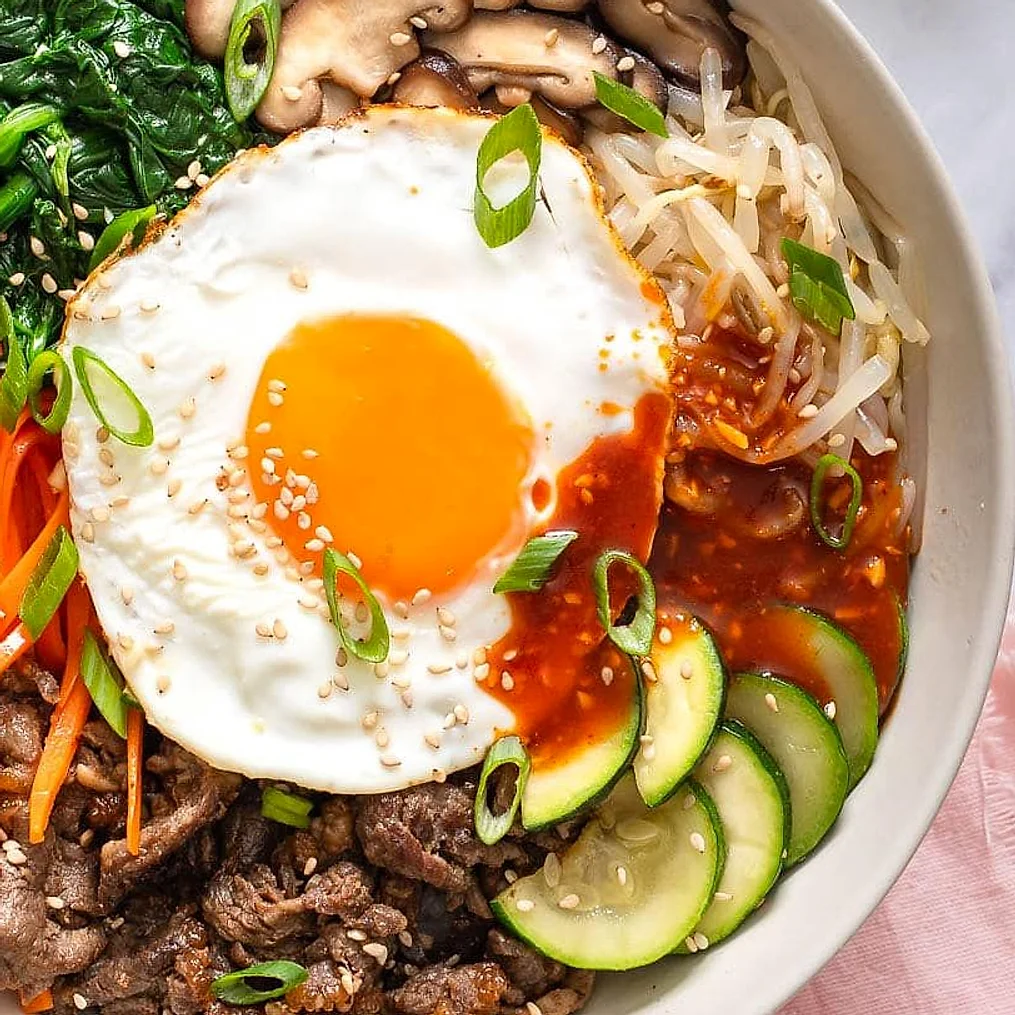
- Step 8 – Fry the eggs in a lightly oiled pan until the whites are set and the yolks are still runny. Divide the warm rice among bowls, arrange the toppings on top, add an egg and sprinkle with sesame seeds.
Expert Tips
- Dry your vegetables – Squeeze spinach well after blanching so the rice does not get soggy.
- Cook in batches – Crowding the pan makes vegetables steam instead of sauté, so cook each one separately.
- Adjust the heat – Start with a smaller spoonful of gochujang sauce and add more to taste.
Serving Suggestions
Serve each bowl with the sauce on the side so everyone can mix in as much heat as they like. A cold drink like barley tea or sparkling water pairs nicely with the rich beef.
For a lighter lunch, add a simple cucumber salad or a few kimchi spears on the side.
How to Store Bibimbap Leftovers
Store the cooked rice, beef and vegetables in separate airtight containers in the fridge for up to 3 days. Keep the sauce and eggs in their own containers so they stay fresh.
To reheat, microwave the rice and beef with a splash of water for 1 to 2 minutes, then add the cold vegetables and a freshly fried egg. Bibimbap does not freeze well because the vegetables become watery.
Frequently Asked Questions
What is bibimbap made of?
Bibimbap is a Korean rice bowl topped with seasoned meat, sautéed vegetables, a fried egg and gochujang sauce. The name means mixed rice, and you stir everything together before eating.
Can I make bibimbap ahead of time?
Yes. Prepare the toppings and sauce up to three days ahead and store them separately. Assemble the bowls just before eating and fry the eggs fresh for the best texture.
Is gochujang very spicy?
Gochujang has a mild to medium heat with a sweet, savory flavor. Start with a small amount in the sauce, then add more if you like a stronger kick.
What can I use instead of short-grain rice?
Medium-grain or sushi rice works well because it turns slightly sticky. Long-grain rice also works, though the bowl will feel a bit less cohesive.
 Recipe byBrooke Miller
Bibimbap (Korean Rice Bowl)
Ingredients
- 8 oz thinly sliced beef (ribeye, sirloin, or tenderloin)
- 3 garlic cloves, minced
- 1 tablespoon soy sauce
- 1 tablespoon honey
- 2 teaspoon sesame oil
- 1 cup bean sprouts
- 1 bunch (8 oz) spinach, ends trimmed and washed
- 1 carrot, julienned
- 8 shiitake mushrooms, stems removed and thinly sliced
- 1 zucchini, chopped into half moons
- 2 cloves garlic, finely minced, divided
- 1 1/4 teaspoon salt, divided
- 1 1/4 teaspoon sesame oil, divided
- 1/4 cup gochujang
- 2 garlic cloves, finely minced
- 2 tablespoon rice vinegar
- 1 tablespoon soy sauce
- 2 tablespoon sugar
- 2 teaspoon sesame oil
- 3 cups cooked short-grain rice
- 3 fried eggs
- Sesame seeds
Instructions
- Combine the beef, 3 minced garlic cloves, 1 tablespoon soy sauce, 1 tablespoon honey and 2 teaspoons sesame oil in a bowl. Marinate for 15 minutes.
- Blanch the spinach in boiling water for 30 seconds, rinse in cold water and squeeze dry. Toss with half the divided minced garlic, 1/4 teaspoon salt and 1/4 teaspoon sesame oil.
- Blanch the bean sprouts for 1 minute, drain and toss with the remaining divided garlic, 1/4 teaspoon salt and 1/4 teaspoon sesame oil.
- Sauté the carrot in a little oil with 1/4 teaspoon salt for 3 minutes until tender-crisp.
- Sauté the shiitake mushrooms with 1/4 teaspoon salt for 4 minutes, then cook the zucchini for 3 minutes. Keep each vegetable separate.
- Cook the marinated beef in a hot skillet for 2 to 3 minutes until browned and cooked through.
- Whisk the gochujang, 2 minced garlic cloves, rice vinegar, 1 tablespoon soy sauce, sugar and 2 teaspoons sesame oil in a small bowl.
- Fry the eggs until whites are set and yolks are runny. Divide the rice among bowls, arrange the toppings, add an egg, drizzle with sauce and sprinkle with sesame seeds.
Notes
- Squeeze spinach well after blanching so the rice stays fluffy.
- Store sauce and eggs separately for best results when meal prepping.
- Use cold or room temperature rice for easier mixing if you prefer.